

Scroll left to review


Nausea and Vomiting Management Strategy for TRODELVY
What to know when developing a nausea and vomiting adverse reaction plan
Patient Education
Educating patients about nausea and vomiting
It’s important to explain the risks of nausea and vomiting to your patients, as well as steps that their healthcare team may take to support them, including premedications, other supportive measures, and take-home medications with clear instructions.

BE AWARE AND PREPARE
TRODELVY is emetogenic and can cause severe nausea and vomiting.
Instruct patients to immediately contact their healthcare provider if they experience uncontrolled nausea or vomiting.1 Withhold TRODELVY doses for Grade 3–4 nausea or vomiting at the time of scheduled treatment administration, and resume with additional supportive measures when resolved to Grade ≤1.
In TRODELVY monotherapy studies (pooled safety data)1
Adverse reaction |
Occurrence in patients treated with TRODELVY |
|---|---|
| Nausea | 63% |
| Grade 3-4 nausea | 3% |
| Vomiting | 33% |
| Grade 3-4 vomiting | 2% |
TRODELVY as combination therapy with pembrolizumab (safety data)1
Adverse reaction |
Occurrence in patients treated with TRODELVY + pembrolizumab |
|---|---|
| Nausea | 68% |
| Grade 3-4 nausea | 3.2% |
| Vomiting | 29% |
| Grade 3-4 vomiting | 0.9% |
Premedication guidance1
Prior to each dose of TRODELVY, premedication for prevention of CINV is recommended
- Premedicate with a 2- or 3-drug combination regimen (eg, dexamethasone with either a 5-HT3 receptor antagonist or an NK1 receptor antagonist, as well as other drugs as needed)
- Additional antiemetics and other supportive measures may also be employed as clinically indicated

Note: Be sure to advise patients of the risk of nausea and vomiting. All patients should be given take-home medications with clear instructions for prevention and treatment of delayed nausea and vomiting. Instruct patients to immediately contact their healthcare provider if they experience uncontrolled nausea or vomiting.
MANAGEMENT STRATEGIES
Strategies to help proactively monitor and manage nausea and vomiting
When a patient starts receiving TRODELVY, it is key to stay alert to any adverse reactions they may experience. This can help you tailor a plan to each patient.

MONITOR
Remind patients to monitor and report any nausea or vomiting they experience1
If the patient experiences nausea or vomiting, first determine the severity.
NCI CTCAE Version 5.0 nausea grade scale3 |
|
|---|---|
|
Grade 1 |
Loss of appetite without alteration in eating habits |
|
Grade 2 |
Oral intake decreased without significant weight loss, dehydration, or malnutrition |
|
Grade 3 |
Inadequate oral caloric or fluid intake; tube feeding, TPN, or hospitalization indicated |
|
Grade 4 |
- |
|
Grade 5 |
- |
NCI CTCAE Version 5.0 vomiting grade scale3 |
|
|---|---|
|
Grade 1 |
Intervention not indicated |
|
Grade 2 |
Outpatient IV hydration; medical intervention indicated |
|
Grade 3 |
Tube feeding, TPN, or hospitalization indicated |
|
Grade 4 |
Life-threatening consequences |
|
Grade 5 |
Death |

MANAGE1
To manage Grade 1–2 nausea or vomiting:
- Employ additional antiemetics. Other supportive measures may also be employed as clinically indicated
- Ensure all patients have been given take-home medications with clear instructions
- Reinforce open and honest communication with your patients
To manage Grade 3–4 nausea or vomiting that is not controlled with antiemetics:
- Withhold TRODELVY until resolved to ≤Grade 1
- Reduce 1 dose level for each occurrence or permanently discontinue according to the dosage reduction level information below
- Employ additional antiemetics. Other supportive measures may also be employed as clinically indicated
- Ensure all patients have been given take-home medications with clear instructions
- Reinforce open and honest communication with your patients
Dosage modifications for adverse reactions for TRODELVY in combination with pembrolizumab or pembrolizumab and berahyaluronidase alfa-pmph
Interrupt or discontinue one or both drugs of the combination or reduce the dose of TRODELVY to manage adverse reactions as appropriate. Refer to the Prescribing Information for pembrolizumab or pembrolizumab and berahyaluronidase alfa-mph for recommendations on dosage interruption or discontinuation due to adverse reactions. For TRODELVY dosage modifications, see the dosage reduction levels chart.
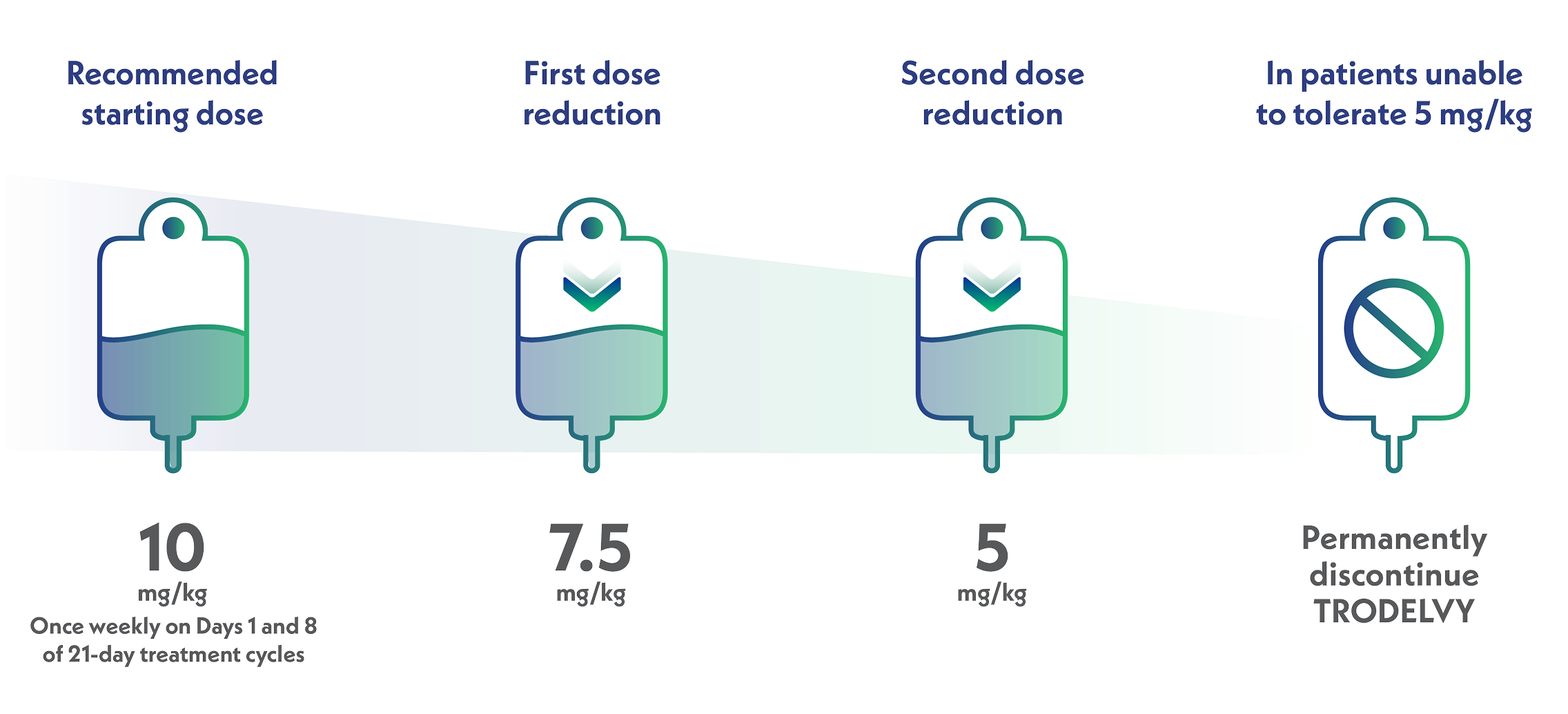
Dosage reduction levels for TRODELVY1
Management of adverse reactions may require temporary interruption, dose reduction, or permanent discontinuation of TRODELVY as described below.1
Scroll left to review
Recommended
starting dose

10
mg/kg
Once weekly on Days 1 and 8 of 21-day treatment cycles
First dose
reduction

7.5
mg/kg
Second dose
reduction
5
mg/kg
In patients unable to tolerate 5 mg/kg

PermanentlydiscontinueTRODELVY
Do not reescalate the TRODELVY dose after a dose reduction for adverse reactions has been made.1
Looking for a print version of adverse reaction management guidance for TRODELVY?
Schedule a visit with your Gilead Oncology Nurse Educator (ONE) or sign up to receive more information from your ONE
5-HT3=5-hydroxytryptamine type 3; IV=intravenous; NK1=neurokinin-1 receptor; TPN=total parenteral nutrition.
References: 1. TRODELVY. Prescribing Information. Gilead Sciences, Inc.; 2026. 2. National Cancer Institute, Division of Cancer Treatment & Diagnosis (DCTD). Common Terminology Criteria for Adverse Events (CTCAE). Version 5.0. National Institutes of Health. Published November 27, 2017. Accessed October 10, 2025.
Continue exploring adverse reaction management strategies
Select another topic
Scroll left to review
TRODELVY® (sacituzumab govitecan-hziy) is a Trop-2–directed antibody and topoisomerase inhibitor conjugate indicated in adult patients:
Locally Advanced or Metastatic Triple-Negative Breast Cancer
First Line
- As a single agent for the first-line treatment of unresectable locally advanced or metastatic triple-negative breast cancer (mTNBC) who are not candidates for PD-1 or PD-L1 inhibitor-based therapy
- In combination with pembrolizumab or pembrolizumab and berahyaluronidase alfa-pmph for the first-line treatment of unresectable locally advanced or mTNBC whose tumors express PD-L1 [Combined Positive Score (CPS ≥10)] as determined by an FDA-authorized test
Second Line or Later
- For the treatment of unresectable locally advanced or mTNBC who have received two or more prior systemic therapies, at least one of them for metastatic disease.
Locally Advanced or Metastatic HR-positive, HER2-negative Breast Cancer
- For the treatment of unresectable locally advanced or metastatic hormone receptor (HR)-positive, human epidermal growth factor receptor 2 (HER2)-negative (IHC 0, IHC 1+, or IHC 2+/ISH–) breast cancer who have received endocrine-based therapy and at least two additional systemic therapies in the metastatic setting.
Important Safety Information
Tap for Important Safety Information, including BOXED WARNING: Neutropenia and Diarrhea.
Boxed Warning: neutropenia and diarrhea
- TRODELVY can cause severe, life-threatening, or fatal neutropenia. Withhold TRODELVY for absolute neutrophil count below 1500/mm3 or neutropenic fever. Monitor blood cell counts periodically during treatment. Primary prophylaxis with G-CSF is recommended for all patients at increased risk of febrile neutropenia. Initiate anti-infective treatment in patients with febrile neutropenia without delay.
- TRODELVY can cause severe diarrhea. Monitor patients with diarrhea and give fluid and electrolytes as needed. At the onset of diarrhea, evaluate for infectious causes and, if negative, promptly initiate loperamide. If severe diarrhea occurs, withhold TRODELVY until resolved to ≤Grade 1 and reduce subsequent doses.
Contraindications
- Severe hypersensitivity reaction to TRODELVY.
Warnings and precautions
Neutropenia: Severe, life-threatening, or fatal neutropenia can occur as early as the first cycle of treatment and may require dose modification. Neutropenia occurred in 64% of patients treated with TRODELVY. Grade 3-4 neutropenia occurred in 48% of patients. Febrile neutropenia occurred in 6%. Neutropenic colitis occurred in 1.4%. Primary prophylaxis with G-CSF is recommended starting in the first cycle of treatment in all patients at increased risk of febrile neutropenia, including older patients, patients with previous neutropenia, poor performance status, organ dysfunction, or multiple comorbidities. Monitor absolute neutrophil count (ANC) during treatment. Withhold TRODELVY for ANC below 1500/mm3 on Day 1 of any cycle or below 1000/mm3 on Day 8 of any cycle. Withhold TRODELVY for neutropenic fever. Treat neutropenia with G-CSF and administer prophylaxis in subsequent cycles as clinically indicated or indicated in Table 2 of USPI.
Diarrhea: Diarrhea occurred in 62% of all patients treated with TRODELVY. Grade 3-4 diarrhea occurred in 10% of patients. One patient had intestinal perforation following diarrhea. Diarrhea that led to dehydration and subsequent acute kidney injury occurred in 0.6% of all patients. Withhold TRODELVY for Grade 3-4 diarrhea and resume when resolved to ≤Grade 1. At onset, evaluate for infectious causes and, if negative, promptly initiate loperamide, 4 mg initially followed by 2 mg with every episode of diarrhea for a maximum of 16 mg daily. Discontinue loperamide 12 hours after diarrhea resolves. Additional supportive measures (eg, fluid and electrolyte replacement) may also be employed as clinically indicated. Patients who exhibit an excessive cholinergic response to treatment can receive appropriate premedication (eg, atropine) for subsequent treatments.
Hypersensitivity and Infusion-Related Reactions: TRODELVY can cause serious hypersensitivity reactions, including life-threatening anaphylactic reactions. Severe signs and symptoms included cardiac arrest, hypotension, wheezing, angioedema, swelling, and skin reactions. Hypersensitivity reactions occurred in 28% of patients with 13% occurring within 24 hours of dosage. Grade 3-4 hypersensitivity occurred in 1.5% of patients with 0.4% of these occurring within 24 hours of dosage. The incidence of hypersensitivity reactions leading to permanent discontinuation of TRODELVY was 0.4%. The incidence of anaphylactic reaction was <0.1%. Pre-infusion medication is recommended. Have medications and emergency equipment to treat such reactions available for immediate use. Closely monitor patients for hypersensitivity and infusion-related reactions during each infusion and for at least 30 minutes after completion of each infusion. Permanently discontinue TRODELVY for Grade 4 infusion-related reactions.
Nausea and Vomiting: TRODELVY is emetogenic and can cause severe nausea and vomiting. Nausea occurred in 63% of all patients treated with TRODELVY, and Grade 3-4 nausea occurred in 3% of these patients. Vomiting occurred in 33% of patients, and Grade 3-4 vomiting occurred in 2% of these patients. Premedicate with a two- or three-drug combination regimen (eg, dexamethasone with either a 5-HT3 receptor antagonist or an NK1 receptor antagonist, as well as other drugs as indicated) for prevention of chemotherapy-induced nausea and vomiting. Withhold TRODELVY doses for Grade 3 nausea or Grade 3-4 vomiting and resume with additional supportive measures when resolved to ≤Grade 1. Additional antiemetics and other supportive measures may also be employed as clinically indicated. All patients should be given take-home medications with clear instructions for prevention and treatment of nausea and vomiting.
Increased Risk of Adverse Reactions in Patients with Reduced UGT1A1 Activity: Patients homozygous for the uridine diphosphate-glucuronosyl transferase 1A1 (UGT1A1)*28 allele are at increased risk for neutropenia, febrile neutropenia, and anemia and may be at increased risk for other adverse reactions with TRODELVY. The incidence of Grade 3-4 neutropenia was 57% in patients homozygous for the UGT1A1*28 allele, 48% in patients heterozygous for the UGT1A1*28 allele, and 41% in patients homozygous for the wild-type allele. The incidence of Grade 3-4 anemia was 17% in patients homozygous for the UGT1A1*28 allele, 9% in patients heterozygous for the UGT1A1*28 allele, and 8% in patients homozygous for the wild-type allele. Closely monitor patients with known reduced UGT1A1 activity for adverse reactions. Withhold or permanently discontinue TRODELVY based on clinical assessment of the onset, duration, and severity of the observed adverse reactions in patients with evidence of acute early-onset or unusually severe adverse reactions, which may indicate reduced UGT1A1 function.
Embryo-Fetal Toxicity: Based on its mechanism of action, TRODELVY can cause teratogenicity and/or embryo-fetal lethality when administered to a pregnant woman. TRODELVY contains a genotoxic component, SN-38, and targets rapidly dividing cells. Advise pregnant women and females of reproductive potential of the potential risk to a fetus. Advise females of reproductive potential to use effective contraception during treatment with TRODELVY and for 6 months after the last dose. Advise male patients with female partners of reproductive potential to use effective contraception during treatment with TRODELVY and for 3 months after the last dose.
Adverse Reactions
In the pooled safety population of TRODELVY as a single agent, the most common (≥25%) adverse reactions, including laboratory abnormalities, were decreased leukocyte count (83%), decreased neutrophil count (77%), decreased hemoglobin (71%), nausea (63%), diarrhea (62%), decreased lymphocyte count (60%), fatigue (59%), alopecia (47%), increased glucose (40%), constipation (37%), vomiting (33%), decreased albumin (32%), increased alkaline phosphatase (30%), decreased appetite (28%), abdominal pain (27%), decreased creatinine clearance (27%), decreased magnesium and potassium (26% each).
In the safety population of TRODELVY in combination with pembrolizumab, the most common (≥25%) adverse reactions, including laboratory abnormalities, were decreased neutrophil count and hemoglobin (86% each), decreased leukocyte count (84%), diarrhea (72%), nausea (68%), decreased lymphocyte count (61%), fatigue (58%), alopecia (52%), increased alkaline phosphatase and glucose (50% each), increased alanine aminotransferase (47%), constipation (41%), increased aspartate aminotransferase (40%), rash (37%), decreased potassium (35%), increased lactate dehydrogenase (34%), vomiting (29%), abdominal pain, headache, and increased eosinophils (26% each), and decreased albumin (25%).
In the ASCENT-03 study (single agent in previously untreated, unresectable locally advanced or mTNBC), the most common adverse reactions (incidence ≥25%) were nausea, diarrhea, alopecia, fatigue, constipation, and vomiting. The most frequent serious adverse reactions (SAR) (>2%) were diarrhea, febrile neutropenia, and neutropenia (3.6% each), and pneumonia (2.9%). SAR occurred in 26% of patients, and 3.6% permanently discontinued TRODELVY due to adverse reactions. Fatal adverse reactions occurred in 2.5% of patients and included sepsis (1.1%), and acute respiratory failure, neutropenic colitis, pneumonia, and septic shock (0.4% each). The most common Grade 3-4 lab abnormalities (incidence ≥25%) were decreased neutrophils and leukocytes.
In the ASCENT-04 study (in combination with pembrolizumab in previously untreated, unresectable locally advanced or mTNBC whose tumors express PD-L1), the most common adverse reactions (incidence ≥25%) were diarrhea, nausea, fatigue, alopecia, constipation, rash, vomiting, abdominal pain, and headache. The most frequent SAR (≥2%) were febrile neutropenia (7%), neutropenia (6%), diarrhea (5%), and fatigue and pneumonia (2.3% each). SAR occurred in 38% of patients, and 7% permanently discontinued TRODELVY due to adverse reactions. Fatal adverse reactions occurred in 3.2% of patients and included death (unknown cause) (0.9%) and completed suicide, neutropenic sepsis, sepsis, pneumonia, and pulmonary embolism (0.5% each). The most common Grade 3-4 lab abnormalities (incidence ≥25%) were decreased neutrophils and leukocytes.
In the ASCENT study (previously treated locally advanced or mTNBC), the most common adverse reactions (incidence ≥25%) were fatigue, diarrhea, nausea, alopecia, constipation, vomiting, abdominal pain, and decreased appetite. The most frequent SAR (>1%) were neutropenia (7%), diarrhea (4%), and pneumonia (3%). SAR occurred in 27% of patients, and 5% permanently discontinued TRODELVY due to adverse reactions. Fatal adverse reactions occurred in 1.2% of patients and included respiratory failure (0.8%) and pneumonia (0.4%). The most common Grade 3-4 lab abnormalities (incidence ≥25%) were decreased neutrophils, leukocytes, and lymphocytes.
In the TROPiCS-02 study (locally advanced or metastatic HR+/HER2– breast cancer), the most common adverse reactions (incidence ≥25%) were diarrhea, fatigue, nausea, alopecia, and constipation. The most frequent SAR (>1%) were diarrhea (5%), febrile neutropenia (4.1%), neutropenia (3%), abdominal pain (2.2%), neutropenic colitis and vomiting (1.9% each), and colitis and pneumonia (1.5% each). SAR occurred in 28% of patients, and 6% permanently discontinued TRODELVY due to adverse reactions. Fatal adverse reactions occurred in 2.2% of patients and included arrhythmia, COVID-19 pneumonia, pneumonia, nervous system disorder, pulmonary embolism, and septic shock (0.4% each). The most common Grade 3-4 lab abnormalities (incidence ≥25%) were decreased neutrophils and leukocytes.
Drug Interactions
UGT1A1 Inhibitors: Avoid administering UGT1A1 inhibitors with TRODELVY. SN-38 is a UGT1A1 substrate. Concomitant administration of TRODELVY with inhibitors of UGT1A1 may increase the incidence of adverse reactions due to potential increase in systemic exposure to SN-38.
UGT1A1 Inducers: Avoid administering UGT1A1 inducers with TRODELVY. SN-38 is a UGT1A1 substrate. Concomitant administration of TRODELVY with inducers of UGT1A1 may reduce exposure to SN-38.
Please see full Prescribing Information, including BOXED WARNING.

TRODELVY® (sacituzumab govitecan-hziy) is a Trop-2–directed antibody and topoisomerase inhibitor conjugate indicated in adult patients:
Locally Advanced or Metastatic Triple-Negative Breast Cancer
First Line
- As a single agent for the first-line treatment of unresectable locally advanced or metastatic triple-negative breast cancer (mTNBC) who are not candidates for PD-1 or PD-L1 inhibitor-based therapy
- In combination with pembrolizumab or pembrolizumab and berahyaluronidase alfa-pmph for the first-line treatment of unresectable locally advanced or mTNBC whose tumors express PD-L1 [Combined Positive Score (CPS ≥10)] as determined by an FDA-authorized test
Second Line or Later
- For the treatment of unresectable locally advanced or mTNBC who have received two or more prior systemic therapies, at least one of them for metastatic disease.
Locally Advanced or Metastatic HR-positive, HER2-negative Breast Cancer
- For the treatment of unresectable locally advanced or metastatic hormone receptor (HR)-positive, human epidermal growth factor receptor 2 (HER2)-negative (IHC 0, IHC 1+, or IHC 2+/ISH–) breast cancer who have received endocrine-based therapy and at least two additional systemic therapies in the metastatic setting.
Important Safety Information
Tap for Important Safety Information, including BOXED WARNING: Neutropenia and Diarrhea.
Boxed Warning: neutropenia and diarrhea
- TRODELVY can cause severe, life-threatening, or fatal neutropenia. Withhold TRODELVY for absolute neutrophil count below 1500/mm3 or neutropenic fever. Monitor blood cell counts periodically during treatment. Primary prophylaxis with G-CSF is recommended for all patients at increased risk of febrile neutropenia. Initiate anti-infective treatment in patients with febrile neutropenia without delay.
- TRODELVY can cause severe diarrhea. Monitor patients with diarrhea and give fluid and electrolytes as needed. At the onset of diarrhea, evaluate for infectious causes and, if negative, promptly initiate loperamide. If severe diarrhea occurs, withhold TRODELVY until resolved to ≤Grade 1 and reduce subsequent doses.
Contraindications
- Severe hypersensitivity reaction to TRODELVY.
Warnings and precautions
Neutropenia: Severe, life-threatening, or fatal neutropenia can occur as early as the first cycle of treatment and may require dose modification. Neutropenia occurred in 64% of patients treated with TRODELVY. Grade 3-4 neutropenia occurred in 48% of patients. Febrile neutropenia occurred in 6%. Neutropenic colitis occurred in 1.4%. Primary prophylaxis with G-CSF is recommended starting in the first cycle of treatment in all patients at increased risk of febrile neutropenia, including older patients, patients with previous neutropenia, poor performance status, organ dysfunction, or multiple comorbidities. Monitor absolute neutrophil count (ANC) during treatment. Withhold TRODELVY for ANC below 1500/mm3 on Day 1 of any cycle or below 1000/mm3 on Day 8 of any cycle. Withhold TRODELVY for neutropenic fever. Treat neutropenia with G-CSF and administer prophylaxis in subsequent cycles as clinically indicated or indicated in Table 2 of USPI.
Diarrhea: Diarrhea occurred in 62% of all patients treated with TRODELVY. Grade 3-4 diarrhea occurred in 10% of patients. One patient had intestinal perforation following diarrhea. Diarrhea that led to dehydration and subsequent acute kidney injury occurred in 0.6% of all patients. Withhold TRODELVY for Grade 3-4 diarrhea and resume when resolved to ≤Grade 1. At onset, evaluate for infectious causes and, if negative, promptly initiate loperamide, 4 mg initially followed by 2 mg with every episode of diarrhea for a maximum of 16 mg daily. Discontinue loperamide 12 hours after diarrhea resolves. Additional supportive measures (eg, fluid and electrolyte replacement) may also be employed as clinically indicated. Patients who exhibit an excessive cholinergic response to treatment can receive appropriate premedication (eg, atropine) for subsequent treatments.
Hypersensitivity and Infusion-Related Reactions: TRODELVY can cause serious hypersensitivity reactions, including life-threatening anaphylactic reactions. Severe signs and symptoms included cardiac arrest, hypotension, wheezing, angioedema, swelling, and skin reactions. Hypersensitivity reactions occurred in 28% of patients with 13% occurring within 24 hours of dosage. Grade 3-4 hypersensitivity occurred in 1.5% of patients with 0.4% of these occurring within 24 hours of dosage. The incidence of hypersensitivity reactions leading to permanent discontinuation of TRODELVY was 0.4%. The incidence of anaphylactic reaction was <0.1%. Pre-infusion medication is recommended. Have medications and emergency equipment to treat such reactions available for immediate use. Closely monitor patients for hypersensitivity and infusion-related reactions during each infusion and for at least 30 minutes after completion of each infusion. Permanently discontinue TRODELVY for Grade 4 infusion-related reactions.
Nausea and Vomiting: TRODELVY is emetogenic and can cause severe nausea and vomiting. Nausea occurred in 63% of all patients treated with TRODELVY, and Grade 3-4 nausea occurred in 3% of these patients. Vomiting occurred in 33% of patients, and Grade 3-4 vomiting occurred in 2% of these patients. Premedicate with a two- or three-drug combination regimen (eg, dexamethasone with either a 5-HT3 receptor antagonist or an NK1 receptor antagonist, as well as other drugs as indicated) for prevention of chemotherapy-induced nausea and vomiting. Withhold TRODELVY doses for Grade 3 nausea or Grade 3-4 vomiting and resume with additional supportive measures when resolved to ≤Grade 1. Additional antiemetics and other supportive measures may also be employed as clinically indicated. All patients should be given take-home medications with clear instructions for prevention and treatment of nausea and vomiting.
Increased Risk of Adverse Reactions in Patients with Reduced UGT1A1 Activity: Patients homozygous for the uridine diphosphate-glucuronosyl transferase 1A1 (UGT1A1)*28 allele are at increased risk for neutropenia, febrile neutropenia, and anemia and may be at increased risk for other adverse reactions with TRODELVY. The incidence of Grade 3-4 neutropenia was 57% in patients homozygous for the UGT1A1*28 allele, 48% in patients heterozygous for the UGT1A1*28 allele, and 41% in patients homozygous for the wild-type allele. The incidence of Grade 3-4 anemia was 17% in patients homozygous for the UGT1A1*28 allele, 9% in patients heterozygous for the UGT1A1*28 allele, and 8% in patients homozygous for the wild-type allele. Closely monitor patients with known reduced UGT1A1 activity for adverse reactions. Withhold or permanently discontinue TRODELVY based on clinical assessment of the onset, duration, and severity of the observed adverse reactions in patients with evidence of acute early-onset or unusually severe adverse reactions, which may indicate reduced UGT1A1 function.
Embryo-Fetal Toxicity: Based on its mechanism of action, TRODELVY can cause teratogenicity and/or embryo-fetal lethality when administered to a pregnant woman. TRODELVY contains a genotoxic component, SN-38, and targets rapidly dividing cells. Advise pregnant women and females of reproductive potential of the potential risk to a fetus. Advise females of reproductive potential to use effective contraception during treatment with TRODELVY and for 6 months after the last dose. Advise male patients with female partners of reproductive potential to use effective contraception during treatment with TRODELVY and for 3 months after the last dose.
Adverse Reactions
In the pooled safety population of TRODELVY as a single agent, the most common (≥25%) adverse reactions, including laboratory abnormalities, were decreased leukocyte count (83%), decreased neutrophil count (77%), decreased hemoglobin (71%), nausea (63%), diarrhea (62%), decreased lymphocyte count (60%), fatigue (59%), alopecia (47%), increased glucose (40%), constipation (37%), vomiting (33%), decreased albumin (32%), increased alkaline phosphatase (30%), decreased appetite (28%), abdominal pain (27%), decreased creatinine clearance (27%), decreased magnesium and potassium (26% each).
In the safety population of TRODELVY in combination with pembrolizumab, the most common (≥25%) adverse reactions, including laboratory abnormalities, were decreased neutrophil count and hemoglobin (86% each), decreased leukocyte count (84%), diarrhea (72%), nausea (68%), decreased lymphocyte count (61%), fatigue (58%), alopecia (52%), increased alkaline phosphatase and glucose (50% each), increased alanine aminotransferase (47%), constipation (41%), increased aspartate aminotransferase (40%), rash (37%), decreased potassium (35%), increased lactate dehydrogenase (34%), vomiting (29%), abdominal pain, headache, and increased eosinophils (26% each), and decreased albumin (25%).
In the ASCENT-03 study (single agent in previously untreated, unresectable locally advanced or mTNBC), the most common adverse reactions (incidence ≥25%) were nausea, diarrhea, alopecia, fatigue, constipation, and vomiting. The most frequent serious adverse reactions (SAR) (>2%) were diarrhea, febrile neutropenia, and neutropenia (3.6% each), and pneumonia (2.9%). SAR occurred in 26% of patients, and 3.6% permanently discontinued TRODELVY due to adverse reactions. Fatal adverse reactions occurred in 2.5% of patients and included sepsis (1.1%), and acute respiratory failure, neutropenic colitis, pneumonia, and septic shock (0.4% each). The most common Grade 3-4 lab abnormalities (incidence ≥25%) were decreased neutrophils and leukocytes.
In the ASCENT-04 study (in combination with pembrolizumab in previously untreated, unresectable locally advanced or mTNBC whose tumors express PD-L1), the most common adverse reactions (incidence ≥25%) were diarrhea, nausea, fatigue, alopecia, constipation, rash, vomiting, abdominal pain, and headache. The most frequent SAR (≥2%) were febrile neutropenia (7%), neutropenia (6%), diarrhea (5%), and fatigue and pneumonia (2.3% each). SAR occurred in 38% of patients, and 7% permanently discontinued TRODELVY due to adverse reactions. Fatal adverse reactions occurred in 3.2% of patients and included death (unknown cause) (0.9%) and completed suicide, neutropenic sepsis, sepsis, pneumonia, and pulmonary embolism (0.5% each). The most common Grade 3-4 lab abnormalities (incidence ≥25%) were decreased neutrophils and leukocytes.
In the ASCENT study (previously treated locally advanced or mTNBC), the most common adverse reactions (incidence ≥25%) were fatigue, diarrhea, nausea, alopecia, constipation, vomiting, abdominal pain, and decreased appetite. The most frequent SAR (>1%) were neutropenia (7%), diarrhea (4%), and pneumonia (3%). SAR occurred in 27% of patients, and 5% permanently discontinued TRODELVY due to adverse reactions. Fatal adverse reactions occurred in 1.2% of patients and included respiratory failure (0.8%) and pneumonia (0.4%). The most common Grade 3-4 lab abnormalities (incidence ≥25%) were decreased neutrophils, leukocytes, and lymphocytes.
In the TROPiCS-02 study (locally advanced or metastatic HR+/HER2– breast cancer), the most common adverse reactions (incidence ≥25%) were diarrhea, fatigue, nausea, alopecia, and constipation. The most frequent SAR (>1%) were diarrhea (5%), febrile neutropenia (4.1%), neutropenia (3%), abdominal pain (2.2%), neutropenic colitis and vomiting (1.9% each), and colitis and pneumonia (1.5% each). SAR occurred in 28% of patients, and 6% permanently discontinued TRODELVY due to adverse reactions. Fatal adverse reactions occurred in 2.2% of patients and included arrhythmia, COVID-19 pneumonia, pneumonia, nervous system disorder, pulmonary embolism, and septic shock (0.4% each). The most common Grade 3-4 lab abnormalities (incidence ≥25%) were decreased neutrophils and leukocytes.
Drug Interactions
UGT1A1 Inhibitors: Avoid administering UGT1A1 inhibitors with TRODELVY. SN-38 is a UGT1A1 substrate. Concomitant administration of TRODELVY with inhibitors of UGT1A1 may increase the incidence of adverse reactions due to potential increase in systemic exposure to SN-38.
UGT1A1 Inducers: Avoid administering UGT1A1 inducers with TRODELVY. SN-38 is a UGT1A1 substrate. Concomitant administration of TRODELVY with inducers of UGT1A1 may reduce exposure to SN-38.
Please see full Prescribing Information, including BOXED WARNING.